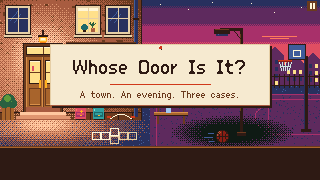
The game opens when you press “Play”.
Some games take longer to open, up to a minute. The page is waiting.
Sound starts off.
Press F or double-click beside the game for full screen and back. Esc leaves full screen.
The same inside the game: Pause → Settings → Full screen.
The game will fill the whole window. To come back here, use your browser's back arrow. Turn your phone sideways — the game will fill the screen.
Whose Door Is It?
Town. Evening. Three cases.
Sound for the game is switched on here, before you play.
The game will fill the whole window. To come back here, use your browser's back arrow. Turn your phone sideways — the game will fill the screen.
- ≈ 25 min · alone or with an adult
- This game was made for ages 14–20.
- No music, only quiet sounds of the place. Sound is optional.
No ads · we sell nothing · only anonymised statistics
A tap at school, a lamp in the yard, a riverbank. Everything belongs to someone. Whose door is it?
This isn't a test. There are no marks. The game asks nothing about you. You can stop any time. Only this device remembers your place in the game.
Frames from the game.
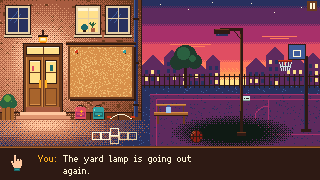 Film · 37 sIt won't start by itself. Sound starts off. You don't have to watch.
Who to play with
About twenty-five minutes. On your own, or two on one phone. You can close the game halfway — it remembers the place.
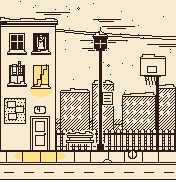
This place on the street
Back to the street ›After the game
The game is over.
You can close this page.
Or tell someone what happened in there.
After the game, you can talk
A few questions for the adult nearby. There are no right answers here, and staying quiet is fine too.
- What happened after the “no” — and which move felt fair?
- What near our home belongs to someone, but nobody knows who?
- Have you ever pushed to get something fixed? Did it work?
No parties or elections in the game: the town is invented, and every “no” has a reason.
Start with what you yourself liked or found surprising.
Whose Door Is It?
Play